AI Video&Photo&AI Kiss-VidNex
- 4.4
- Rating
- 10.00K
- Installs
- Free
- Price
 Analysis by App-foxy
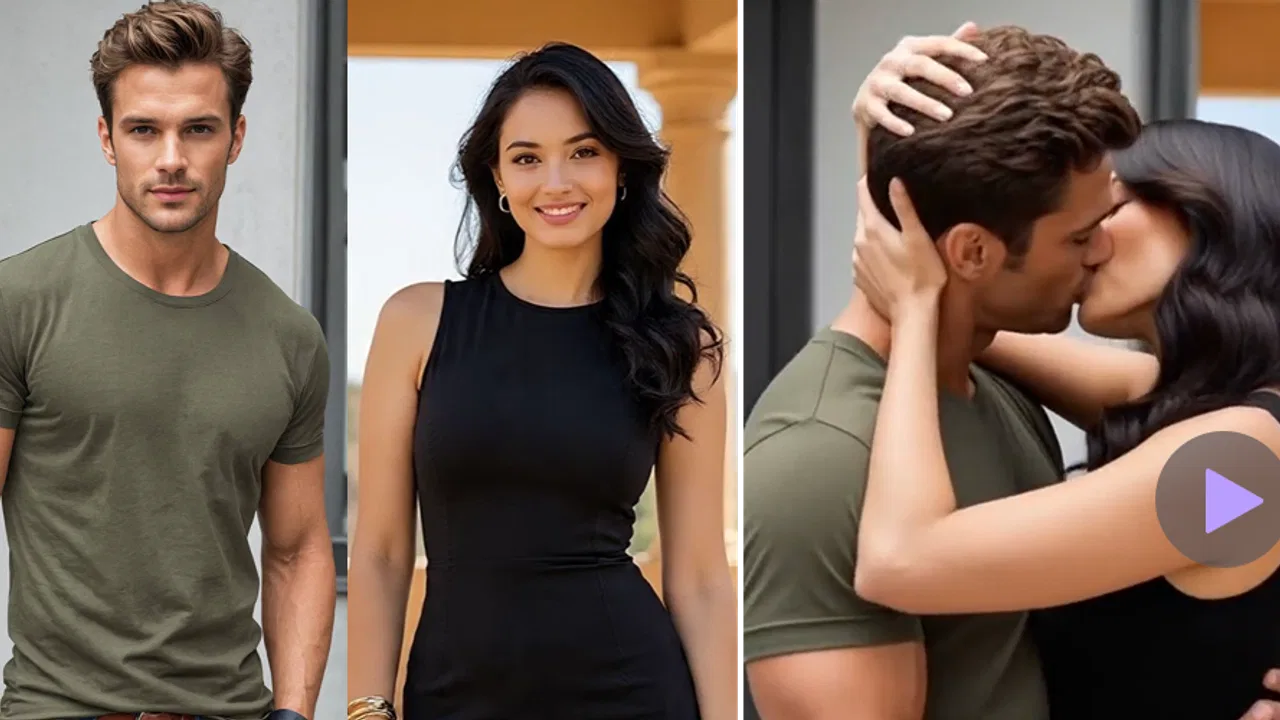
I spent time with AI Video&Photo&AI Kiss-VidNex as a photography app focused on turning still images and written ideas into more animated, shareable visual content. Its appeal is easy to understand: instead of stopping at a finished photo, you can explore AI-assisted video creation, image-to-video work, face-swap video, AI image generation, text-to-video concepts, and kiss-themed transformations from one place. That makes it more of a creative playground than a traditional camera editor.
My first impression was that the app is aimed at people who want quick experiments rather than a long, technical editing session. The store description is broad, but the practical attraction is the same throughout: start with an image or an idea, then see how the app interprets it. I found that approach enjoyable when I treated each result as a draft to refine, not as a guaranteed finished production.
AI Video&Photo&AI Kiss-VidNex is free to install, with optional in-app purchases listed from $5.99 to $199.99 per item. That distinction matters. You can try the app without paying at the door, but the free experience should be judged as an opportunity to test its workflow, while serious or frequent use may lead you toward paid options. The app is rated for Everyone, runs on Android 7.0 or later, and comes from the developer Face swap video.
You May Also Like

 AccuWeather: Weather Radar
AccuWeather Review: A Quick, Clear Forecast for Everyday Decisions
For everyday plans, the best forecast is the one you can understand quickly. AccuWeather makes rain timing, radar, and local conditions easy to act on, with a few trade-offs.

 Hill Climb Racing
Why Hill Climb Racing Still Turns Crashes Into One More Run
A tiny car, a bumpy hill and one more upgrade: Hill Climb Racing keeps resurfacing because its simple chaos makes every near-miss feel personal.

 AliExpress - Shopping App
AliExpress Makes Global Shopping Feel Personal, but Shoppers Bear the Risk
AliExpress turns a global marketplace into a pocket-sized discovery engine. Its reach is useful, its shopping loop compelling, and its trade-offs easy to miss.

 Lords Mobile: Kingdom Wars
Lords Mobile Is a Kingdom-Building Routine, Not a Quick Match
A case-by-case verdict on the building, battles, device demands, and social commitments that make Lords Mobile rewarding for some players and exhausting for others.

 PDF Scanner app - TapScanner
TapScanner Makes Paperwork Easier to Capture, Check, and Share
TapScanner makes scanning with a phone feel less like a rescue operation and more like a dependable step in getting work done. Its capture tools are useful, though not flawless.

 Block Blast!
 Shows How Much a Puzzle Game Can Leave Out
A quiet grid game shows why puzzle players increasingly value instant clarity, repeatable skill and low-pressure play—and where the genre still needs to catch up.
More From Our News Desk
View All News


How the app creates value beyond a normal photo editor
I find the app’s value lies less in replacing a photo editor than in giving me a quick way to turn a picture or a passing idea into something more expressive. That makes it useful for playful messages and early visual concepts, while careful source selection and a close review of each result still matter. The next section looks at how its current version and release timing shape what existing and prospective users can reasonably expect.
From a still image to a short visual idea
The most useful way to approach this app is to begin with a clear purpose. A portrait can become a playful clip, a travel photo can receive motion, and a simple concept can become a visual experiment through text or image generation. This is different from using a conventional editor, where I would manually crop, adjust color, add transitions, and place effects. Here, the interesting part is handing over some creative control and seeing what the AI makes of the source.
That convenience is also the app’s strongest everyday advantage. If I wanted to send a friend something more expressive than a static selfie, a face-swap or kiss-style video could provide a quick novelty without requiring a desktop editor. For a social post, a private joke, or a birthday message, the speed of trying an idea can be more valuable than precise professional control.
There is a useful workflow hidden in that simplicity: I would prepare several source images before generating anything. A clear face, even lighting, and an uncluttered background give the system a better starting point than a dark group photo with overlapping faces. I also prefer images where the subject is looking toward the camera and is not partly covered by glasses, hair, or hands. These are not guarantees, but they make the creative process less wasteful because weak source material often produces weak transformations.
Face swapping is entertaining, but it needs restraint
The face-swap video function is likely to attract the most curiosity. It can turn a familiar face into the central element of a short transformation, which makes it suitable for lighthearted content among people who understand the joke. I would use it with my own images or with clear permission from anyone else shown. That is not just a matter of good manners: a convincing-looking face transformation can easily be misunderstood when shared without context.
I also found that face swapping works best when the source and target faces have broadly compatible angles and expressions. A front-facing portrait is a more sensible starting point than a profile shot. When the faces differ dramatically in lighting or pose, the result may look less natural, and no amount of enthusiasm can turn every mismatch into a convincing clip.
One practical tip is to keep the first generation simple. I would avoid combining a difficult face swap with a crowded background, strong movement, and several visual changes at once. Testing one transformation first helps identify whether the problem comes from the face source, the scene, or the requested style. That saves time and makes it easier to decide whether another attempt is worth the effort.
Text-to-video and AI images suit brainstorming
The text-based tools are most valuable when I have a visual idea but no suitable photograph. They can help turn a short concept into something to discuss, share, or develop further. I would not treat the output as a replacement for a carefully planned shoot or a professional animation workflow. Instead, I see it as a fast sketchbook: useful for exploring a mood, a scene, or a playful prompt before investing more time elsewhere.
Prompt wording makes a noticeable difference in this kind of workflow. I would describe the subject, setting, mood, and movement separately rather than writing one vague sentence. For example, specifying a close portrait, a warm indoor setting, and gentle movement gives the app more direction than simply asking for a “beautiful video.” If the first result misses the point, changing one part of the prompt at a time is more informative than rewriting everything.
Another useful habit is saving the original image and the prompt beside the generated result. That lets me compare attempts and remember what created a better outcome. It also prevents a common mistake: accepting the first interesting-looking result even when it has distorted details that become obvious after closer inspection.
What the free entry point really means
The free installation lowers the barrier to experimentation. I can decide whether the style of generation suits me before considering any purchase, which is a sensible arrangement for an app whose usefulness depends heavily on personal taste and the kinds of images I want to make. The current version is 1.0.9, and the app has passed the early discovery stage with over 10 thousand installs and a 4.4 average from around 900 ratings.
Those figures suggest that people are trying it and generally responding positively, but they do not tell me that every tool is equally strong or that every user will find the paid options worthwhile. I would judge the app by a small personal test: use a few different source images, try both an image-led workflow and a text-led workflow, then inspect the results at normal viewing size. If the output is already useful for my intended purpose, the free access has done its job as a trial.
The purchase range deserves careful attention. A low-priced item and a high-priced item are very different commitments, and the listed range reaches from $5.99 to $199.99 per item. I would not buy simply because a generation looks promising. I would first decide how often I expect to use the app, whether I need repeated creations, and whether the result is good enough to replace a slower alternative. The free starting point is valuable; the paid value depends on actual frequency and quality for each person.
Where it feels less dependable than a traditional editor
AI creation trades exact control for speed. In a standard photo or video editor, I can choose the crop, timing, text position, color adjustment, and transition myself. With AI-assisted generation, I am asking the system to interpret the image or prompt, so the result may not follow my intention perfectly. That is exciting for discovery, but frustrating when I need a precise visual for work, branding, or an important announcement.
It is also worth separating a fun transformation from a polished final asset. A face-swap clip may look entertaining at first glance while still showing small inconsistencies in facial details, edges, or movement. Text-to-video results can capture the general idea without matching every detail in the request. For casual sharing, those imperfections may be part of the charm. For client-facing content, I would want a more controlled tool or a second editing stage.
Another trade-off is repetition. The first few experiments feel fresh because the app is doing something unexpected with familiar material. After that, the novelty depends on whether I have a steady supply of good images and new concepts. Someone who only wants to make one novelty clip may enjoy the free trial and stop there. Someone planning regular content needs to evaluate consistency, not just the best single result.
Privacy-minded use and responsible sharing
Because the app works with faces and personal images, I would be selective about what I upload. I would begin with non-sensitive pictures and avoid using images of children, private documents, confidential work, or people who have not agreed to the transformation. I would also think carefully before posting a realistic face-swap publicly, especially if viewers could mistake it for an authentic recording.
This caution does not make the app less useful; it makes the use case clearer. It is well suited to consensual, playful projects where everyone understands that the image has been altered. It is a poor choice for impersonation, misleading announcements, or content intended to embarrass someone. The same ease that makes the app fun also makes responsible judgment important.
Who will get the most from it?
I would recommend trying it to casual creators, social media users, and people who enjoy experimenting with AI image and video tools. It is especially appealing if I want to turn a personal photo into a conversation starter without learning a complicated timeline editor. The combination of image-to-video, face swapping, AI images, and text-based creation gives me several directions to explore instead of locking me into one format.
It can also help someone who struggles with the blank page. A text prompt can provide a starting point, while an existing photo can supply the subject and mood. I would use the app to generate rough ideas for a themed post, a playful invitation, or a visual message to friends. The important expectation is that the app accelerates ideation; it does not remove the need to choose, review, and sometimes redo the result.
I would be more cautious recommending it to professional photographers, video editors, or marketers who need frame-by-frame control and predictable brand consistency. A conventional editor is better when exact placement, repeatable output, and detailed retouching matter more than surprise. Likewise, people who dislike AI-generated imagery or who only need basic brightness, cropping, and trimming may find this app more elaborate than necessary.
How it compares with the usual alternatives
Compared with a normal photo editor, this app is stronger at transformation and idea generation, but weaker when I want direct manual control. A traditional editor lets me make small corrections with confidence. AI Video&Photo&AI Kiss-VidNex is more interesting when I want the software to invent movement, reinterpret a face, or build something from a description.
Compared with a dedicated video editor, it appears better suited to quick AI experiments than to assembling a complete, carefully timed production. A dedicated editor remains the better choice for multiple clips, detailed audio work, captions, and exact sequencing. I would use this app at the beginning of that process if I needed an unusual visual, then move the result into another tool for finishing.
Compared with a single-purpose face-swap app, its broader collection of image and video ideas is a genuine advantage. I am not limited to one novelty effect, so the app has more potential value if my interests change. The trade-off is that a specialist tool may feel more focused for one specific task. If face swapping is the only reason I am installing anything, I would compare the quality and workflow directly before paying for extended use.
My practical recommendation before spending money
I would begin with three tests. First, use a clean portrait for a face-based transformation. Second, use a landscape or everyday photo for image-to-video experimentation. Third, write a short, specific prompt for an AI-generated scene. These tests cover different strengths and reveal whether the app fits my actual habits rather than merely looking appealing in a store summary.
After each attempt, I would check the result without immediately sharing it. Look at the face, hands, background edges, and any moving details. If the clip is meant for friends, minor oddities may be acceptable; if it represents me publicly, they may not be. I would also keep the source files separate so that an unsuccessful generation never becomes the only copy of an important image.
For paid use, my rule would be simple: purchase only after the free experience has produced something I would genuinely use more than once. The listed prices span a wide range, so there is no sensible one-size-fits-all value judgment. A frequent creator may see value in repeated access, while an occasional user may be satisfied with experimentation and prefer a manual editor for everything else.
My final verdict
AI Video&Photo&AI Kiss-VidNex is a fun, accessible photography app for turning ordinary images and short ideas into AI-assisted visual experiments. I like its breadth: face-swap video, image-to-video creation, AI images, and text-led concepts give me more room to play than a basic filter app. The free installation makes it easy to test that creative promise without committing immediately.
Its limitations are just as important. Results need inspection, AI interpretation is not the same as precise editing, and the paid range means I would think carefully before upgrading. The app is not my first choice for professional consistency, detailed manual retouching, or a full video-production workflow. It is better when I want speed, novelty, and a low-pressure way to explore an idea.
My buy-or-skip verdict is to try it if you enjoy playful transformations and have your own suitable images. I would keep the free access as a testing ground, use face-based features only with consent, and pay only when the app proves useful in a repeated personal workflow. For that audience, it offers real creative value. For anyone seeking exact control or a conventional editor, skipping it in favor of a focused alternative is the more sensible choice.
FAQs for AI Video&Photo&AI Kiss-VidNex
01What is AI Video&Photo&AI Kiss-VidNex used for?
AI Video&Photo&AI Kiss-VidNex is designed for creating and editing AI-powered visual content, including videos, photos, and face-focused effects such as simulated kiss or couple animations. After selecting suitable images, users can apply available templates or effects to generate short, shareable results. The app is mainly intended for entertainment and social media content rather than professional video production.
02How does AI Kiss-VidNex create videos from photos?
The app generally works by asking you to select or upload one or more photos, then choosing an AI effect, animation, or template. Its system analyzes facial features and applies motion or transformation to produce a short video. Results can vary depending on image quality, lighting, face position, and whether the people in the photo are clearly visible and facing the camera.
03Is AI Video&Photo&AI Kiss-VidNex free to use?
The application may allow users to try selected tools or create limited content without payment, but some effects, exports, or advanced AI features can be restricted behind in-app purchases or a subscription. Before confirming a trial or payment, check the current pricing, renewal terms, and cancellation instructions shown in the app store and inside the application.
04Is it safe to upload personal photos to AI Kiss-VidNex?
You should review the app’s privacy policy before uploading personal, sensitive, or identifiable images. AI photo and video services may process content on remote servers, and the handling of uploaded files can differ by feature. Avoid submitting private documents or photos of other people without permission, and check whether the app explains storage, deletion, sharing, and third-party processing practices.
05What kind of photos produce the best results in the app?
For more convincing AI animations, use clear, high-resolution photos with good lighting and unobstructed faces. Images where subjects look toward the camera, have neutral expressions, and are not heavily cropped usually work better than blurry group photos or pictures with sunglasses and extreme angles. Results are creative simulations, so occasional distortions or unnatural facial movements should be expected.
Pros
- Combines AI video
- photo
- and kiss effects in one app.
- Quickly creates shareable clips with simple editing tools.
- Offers entertaining templates for social media content.
- Useful for experimenting with creative AI transformations.
- Designed for casual users without advanced editing skills.
Cons
- Results can vary noticeably depending on the source photo quality.
- Some effects may look artificial or poorly aligned.
- Many premium features may require payment or a subscription.
- AI processing can take time
- especially for longer videos.
- Privacy concerns may arise when uploading personal photos.

AI Video&Photo&AI Kiss-VidNex
Gallery